
How to breathe your way to calm
Have you ever felt like life is moving too fast? Inbox full, to-do list getting longer, thoughts racing. Sometimes the easiest way to hit pause isn’t to change your schedule or go on a retreat. It’s to do one simple thing: breathe.
You’ve been breathing every day since, well, forever, and yet, most of us don’t really pay attention to it. But breathing can be a powerful tool to unlock a new sense of peace. And the best part, it can be done anywhere, anytime. It just takes a few mindful breath techniques to slow your heart, ease tension and bring your mind back to the present. Calm starts from inside and your breath is the fastest way to get there.
Hack your nervous system
Slow, controlled breathing can help you out of fight-or-flight. This state is the body’s reaction to perceived threat: the heart rate will increase and the muscles will tense in preparation for action. The problem is, modern life can mean perceived threat might come in the form of an email notification, or an invitation to a social event.
Slowing your breath is the easiest way to send a clear signal to your nervous system that it’s safe to stand down. Heart rate settles, tension eases and your mind can catch up with your body and think clearly. You’ll shift from reactive to grounded simply by harnessing something you’re already doing.
Breath supports from the inside out
It’s worth mentioning that this shift from fight-or-flight to rest-digest-restore has very real physical benefits too. As your breath deepens, oxygen flows more efficiently, muscles soften and your whole system moves out of tension mode. Digestion can improve because your body is able to use energy more effectively. You may even notice aches easing as your body stops bracing.
Focus attention, stay present
Paying attention to your breath trains your mind to stay present and can improve concentration. At first, staying focused can feel nearly impossible, the mind loves to wonder. But returning to the breath when you notice your attention drifting is a practice of presence, a mindfulness meditation. This simple repetition helps anchor you in the now, rather than letting the mind ruminate or worry.
Now that you know the why, let’s get to the how. This is where the real magic happens. Below are a few beginner-friendly techniques that can help you shift gears and access the calm that’s already within you.
Breathing Techniques
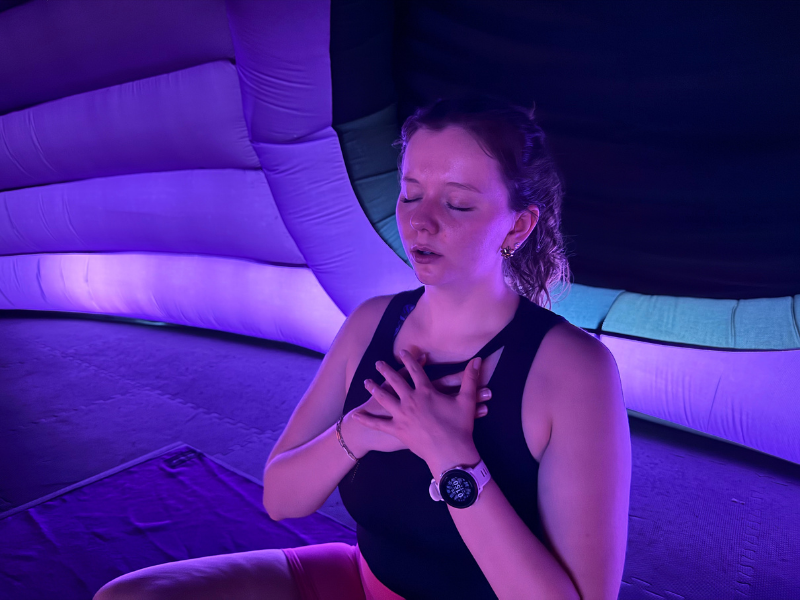
Box breathing
Box breathing is a simple technique that encourages deep, controlled breaths, making it perfect for calming the mind and nervous system. To try: inhale slowly for four counts, hold the breath at full for four counts, exhale for four counts and then hold again at empty for four counts. Once you feel comfortable, you can gradually extend to five, six or more. The key is to keep the inhales and exhales even, steady and controlled.
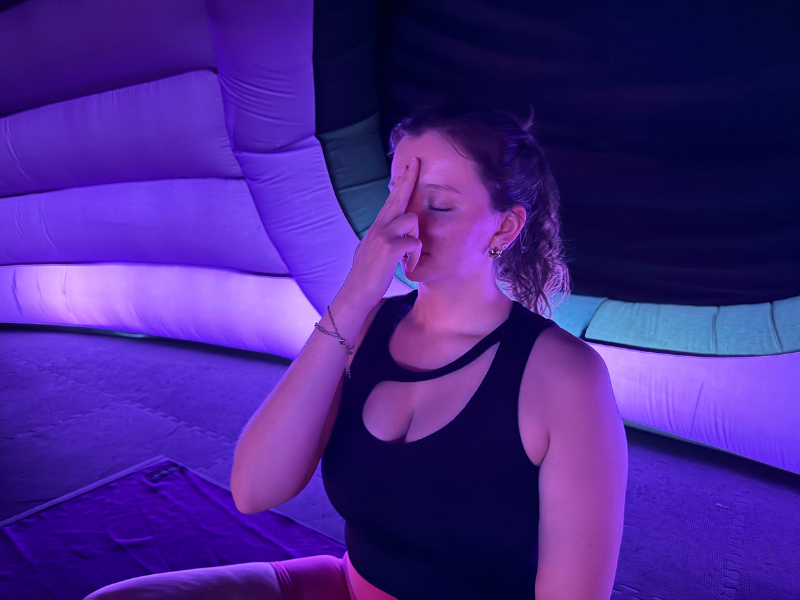
Alternate nostril breathing (Nadi Shodhana)
Alternate nostril breathing can help ease stress and improve focus. Start by placing your right index finger and middle finger between your eyebrows, and use your right thumb to gently close your right nostril. Inhale slowly through your left nostril, then close the left with your ring finger and exhale through the right. Keep the inhales and exhales slow and repeat five or six times.
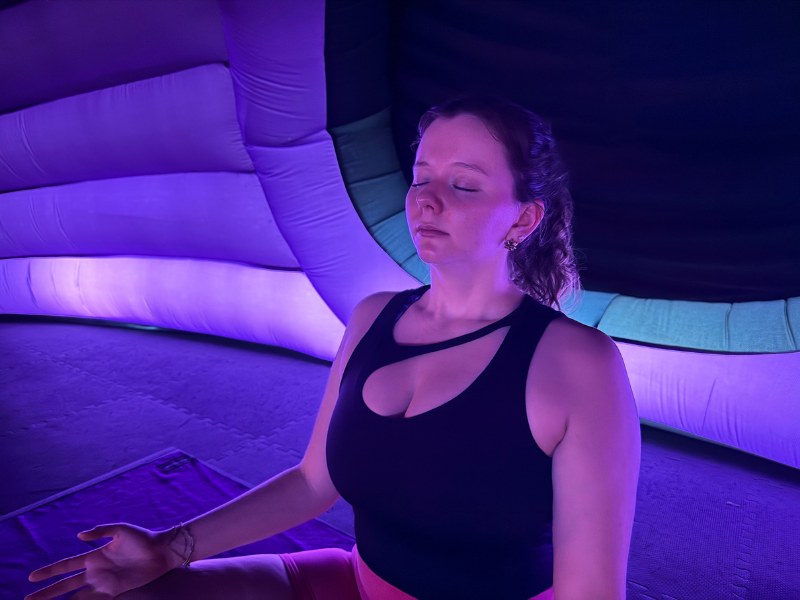
Ocean breath (Ujjayi breath)
Ujjayi breath, often called ‘ocean breath,’ is commonly used alongside the physical practice of yoga. To do it, inhale through your nose while slightly constricting the back of your throat — this is the same action you’d find when fogging up a window with your breath except here, the mouth is closed — exhale the same way. This gentle constriction helps keep the breath steady and controlled, allowing your mind to stay focused and present, while also encouraging more efficient use of your lungs.
Releasing breaths
Releasing breaths are simple exhales designed to let go of stress. Take a deep inhale through your nose, then exhale fully through your mouth, imagining you’re letting tension leave your body. You can add a sigh or gentle audible exhale. We do this naturally in everyday life, but here it has a little more purpose. It signals to your nervous system that you’re safe to relax. Take a couple of these anytime during the day and feel yourself reset, letting the physical and mental tension go.
Breathwork is simple, portable and powerful. Just a few minutes a day can help you slow down and reconnect with the present from a grounded, centred place. Try these exercises and feel the difference for yourself, you’ll never underestimate the power of a simple breath again.